There is something to be said about Matthew Phillpot-Jones and how he moves through this world. It’s quiet. It’s radical. And it’s really sensory.
Better known as DMVU, the Denver-based producer has spent nearly a decade building one of the most unique ‘sounds’ in bass music (unorthodoxly). By ignoring trends rather than chasing them. His studio backs against a state forest on the edge of Bear Creek. His sliding glass door opens to a greenbelt stretching all the way to the mountains. It feels right that a man who has spent years translating the textures of everyday life into sound somewhere the everyday and extraordinary are inseparable.
On April 24th, at Denver’s Black Box, DMVU headlined a release show for Soothsayer, a ten-track album released across three installments, completing a trilogy that has unfolded over the previous few weeks. In my opinion, it’s his most personal body of work yet, and maybe even his most audacious. Before he took the stage, we sat down to talk about where Soothsayer came from and what it means to rediscover yourself after persevering.
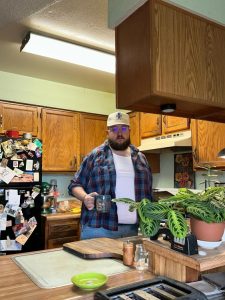
Who Is DMVU?
Matt grew up in New Hampshire before landing in Denver, a move that he credits as the single biggest factor in who he became as an artist. His parents laid an exceptional music foundation: his mother had “insanely good music taste” across a plethora of genres. She was the first in the house to find Future, via a Datpiff.com mixtape, while his father played piano and accordion and steered him towards folk and traditional music.
The production side started when a runaway friend taught him to pirate software in eighth grade. Through pirating games also came pirating synthesizers. Through synthesizers, he discovered passion. He didn’t even know sample packs existed until he found a trance loop CD at Goodwill while doing community service for a graffiti charge.
That scrappy origin is very much still existing in how he operates. He writes, records, and even mixes everything himself. A Grammy-balloted solo artist who has released on Dome of Doom, Circus Records, and Deep Dark & Dangerous, who has built a catalog that covers deeply introspective downtempo and what I like to call ‘dancefloor demolition.” There’s something to be sad about someone who brands themselves on that unapologetically. Soothsayer is the latest chapter, and the most personal one yet.
We sat down with Matt at The Black Box in Denver before his Soothsayer release show.
Omid Eghbal: Anything you want to say to the people before we dive in?
Matthew Phillpot-Jones: Listen to your heart. And Free Palestine
OE: So, you grew up in New Hampshire, ended up in Denver, and built something that operates pretty far outside the mainstream. Was there a moment where you knew this was actually going to be your thing?
MPJ: Not really. I just kept doing it until I was getting fired from the little jobs I was trying to keep because I kept taking too much time off to play shows. I feel like it’s one of those things where if you don’t try, it’ll work, and if you try, it won’t work. Which is very Zen and also completely unexplainable. But yeah, this was not part of the plan. It was a little bit of luck and a little bit of hard work.
OE: Fair to say things would be different if you’d stayed in New Hampshire then?
MPJ: Absolutely, I’d probably be a lobster fisherman. After I started touring, I’d go to other parts of the country and realize in Nebraska they’d just found Zeds Dead three years ago. I had it made. If I’d grown up anywhere else, I would not be in the situation I am in
OE: For people just discovering your music: Soothsayer, a record that was on the Grammy ballot, Bloccd, how would you describe what you do?
MPJ: I make lots of variations of music. All of it is bass-oriented, low-end focused, percussion and drum-oriented. I clearly go all over the place, but that’s because I get bored easily. “Bass music” is not the best term, but from a technical standpoint, it summarizes it correctly.
OE: You’ve talked about how gaming and technology shaped how you got into production. Can you talk about that?
MPJ: It started in eighth or ninth grade, pirating games. A friend who ran away from home taught me how to pirate things, and through pirating games came pirating synthesizers. We’d use freeware: Audacity, the trial version of Acid, and just dick around. We asked ourselves what cool programs we steal? It came from a place of delinquency, and it turned into love.
OE: The parallel to today’s world with artists releasing sample packs, patches.. is that a line you draw back to that era?
MPJ: There wasn’t a splice or anything like that. Because of that, you had to be a little more creative and take things backwards. I’m not shit-talking Splice, I just mean when there are fewer options, you gotta try a little harder. If I had had access to Splice when I was a young producer, I would have been less creative. My music would have sounded a lot better, though.
OE: Both your parents were musically versed. How much did that shape you?
MPJ: My mom didn’t play, but she had insanely good taste, and it was super broad. She got me into Art of Noise, Enigma, and Enya. The first time I ever heard Future was when I was listening to a Datpiff mixtape when I came home from school. My dad played piano and accordion and got me into folk music and traditional music. Between the two of them, I built a vast repertoire in my head of different stylings, which really helped. There’s always been a piano in my house too — first instrument I seriously played was drums, though. My very loving and caring parents got me a pawn shop drum set in fourth grade.
OE: So then, when you’re making a song now, are you playing things on MIDI or clicking and dragging?
MPJ: A lot of it is hand-played and then corrected. I like starting with something tangible I can do with my hands: little percussion things, chords. It’s almost like having an extra arm.
OE: A lot of producers in bass music never played instruments; there’s something unique that comes from that, too.
MPJ: There’s a very unique style that comes from people with no musical training. The less you know, the more you can make these weird mistakes that turn into good things. People with too much classical training can box themselves in. Someone with no background is just throwing paint at the wall. I would never tell someone not to learn music theory, but I don’t think people should feel bad if they don’t. There are no fucking rules.
OE: When you were working on the trilogy structure, were you trying to guide the listener toward a specific tone?
MPJ: It was all written in one of those same stylistic periods, like an eight-month window. I didn’t plan it as an album. I landed on releasing it as individual EPs that make up one whole at the end. Something I’d never done. I was like, fuck it, what can it hurt to try something new?
OE: Do you want the listener to feel a certain way?
MPJ: It’s like fantasy. Everyone, when they write art, hopes it will be received a certain way. But once you release it, it is no longer yours. Someone’s “misunderstanding” of a song is not really a misunderstanding. It means something different to everyone, and if they find specific meaning in it, that is the meaning. Whatever they find is correct.
OE: What does Soothsayer mean to you personally?
MPJ: This was the first big body of music I wrote once I got sober. It’s scary. I wrote way less music because I was essentially relearning how to be myself. It was an experiment to see who I am and how my relationship with art has changed since getting sober.
OE: Congratulations on getting sober. Can you share a bit about your history there?
MPJ: The entirety of my creative life, I don’t think I played a show sober from the age of 17 onwards. I liked drinking, I liked doing powders, I liked taking pills. At one point, I had the thought, “do you I know how to do this if I’m not fucked up?” Then, on June 15, 2024, Went home from the club, and was like.. .. I cannot fucking do this anymore. There was a deep, decade-long exhaustion from partying. It just wasn’t fun anymore
I was in an alley at 3 a.m. I had just turned 30. My 12-year-old self would be like, “What the fuck are you doing? You’ve somehow lived out this accidental dream, and you’re just in the alley doing drugs.” I had to heal my wounded inner child, and the only way to do that was to stop being a wild man.
OE: There’s a tension in your career: introspective, downtempo studio output, but a live reputation for high-energy sets. How do you sit with that paradox?
MPJ: It’s tough. I really try to separate the booking: if I’m on a flyer, it’ll say what kind of set it is. Because people will DM me at a downtempo set and ask me to play “50 Pounds.” That’s not going to fit here. At the end of the day, I’m just making what I want to make. I can go to bed and feel good about myself.
OE: Your album artwork has this stillness-in-nature quality to it. I’m looking at one with a fox. Where does that come from?
MPJ: I’m a big fan of nature. My house backs up to Bear Creek. I don’t have a backyard; it’s just my sliding glass door and then open space that goes all the way to the mountains. I’ve been around there my whole life. Nature is my best friend. The one thing that keeps me going.
OE: Dreams have come up in discussions about your music. How does that show up creatively?
MPJ: I’ve never lucid dreamed. My dreams are really weird. Surreal, still-image instances of life. Difficult to articulate. I try to write them down now. First thing in the morning: journal. If I have the strength to hold a pencil. I use a lot of real-life textures in my music. I think there’s magic to be found in everyday life. Music and art are like a drop of ink in a glass of water. It highlights currents that already exist, that the naked eye can’t see. Dreams are kind of on the same plane. How? I don’t know. But it feels right.
OE: You write, record, and mix everything yourself. Is there ever a downside?
MPJ: Oh yeah. Some of my favorite mixdowns I’ve ever heard on my tracks were not done by me. Bob Mack, Daddy Kev: those dudes have brought out truly magical qualities in my music. I’d rather go through someone I trust deeply. It’s just that chill stuff doesn’t need to be mind-numbingly loud, so the ceiling is lower, and it’s easier to do myself.
OE: With that said, do you wish you had more collaborators in that process?
MPJ: I’m bad at working with others: I have control issues, which is probably why I’m a solo artist. But there are such profound realizations to be had during collaborations. I really prefer collaborating with vocalists and instrumentalists. I have a track with Herbalistek on my upcoming EP: the first collab I’ve done in a while, and it was refreshing. I also made something with Duffrey recently and we’re actually planning to finish that and make it something a little shinier.
OE: Before we let you go, where should people find Soothsayer?
MPJ: Bandcamp, always. Spotify and Apple are evil corporations. Bandcamp will always be the best place. But it’s on every streaming service. No physical release yet, but who knows what the future holds.
OE: If you were a soothsayer, you’d know
MPJ: If I were a soothsayer, I would know what the future was. But alas. Who’s to say?
Soothsayer is out now on all streaming platforms. Support DMVU directly:
Soundcloud | Bandcamp | Spotify

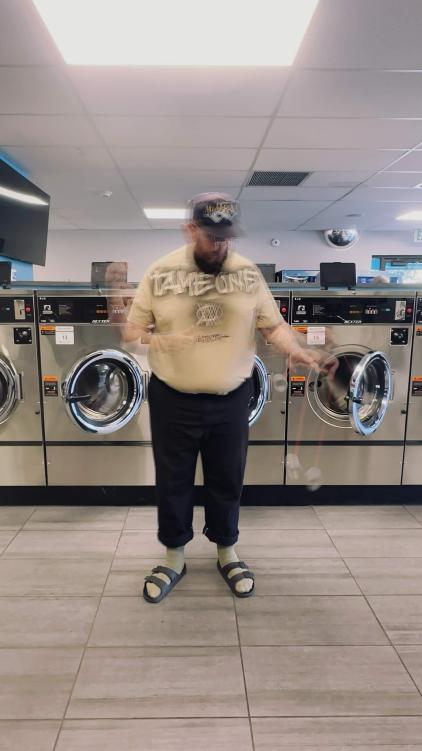



There is something to be said about Matthew Phillpot-Jones and how he moves through this world. It’s quiet. It’s radical. And it’s really sensory.
Better known as DMVU, the Denver-based producer has spent nearly a decade building one of the most unique ‘sounds’ in bass music (unorthodoxly). By ignoring trends rather than chasing them. His studio backs against a state forest on the edge of Bear Creek. His sliding glass door opens to a greenbelt stretching all the way to the mountains. It feels right that a man who has spent years translating the textures of everyday life into sound somewhere the everyday and extraordinary are inseparable.
On April 24th, at Denver’s Black Box, DMVU headlined a release show for Soothsayer, a ten-track album released across three installments, completing a trilogy that has unfolded over the previous few weeks. In my opinion, it’s his most personal body of work yet, and maybe even his most audacious. Before he took the stage, we sat down to talk about where Soothsayer came from and what it means to rediscover yourself after persevering.
Who Is DMVU?
Matt grew up in New Hampshire before landing in Denver, a move that he credits as the single biggest factor in who he became as an artist. His parents laid an exceptional music foundation: his mother had “insanely good music taste” across a plethora of genres. She was the first in the house to find Future, via a Datpiff.com mixtape, while his father played piano and accordion and steered him towards folk and traditional music.
The production side started when a runaway friend taught him to pirate software in eighth grade. Through pirating games also came pirating synthesizers. Through synthesizers, he discovered passion. He didn’t even know sample packs existed until he found a trance loop CD at Goodwill while doing community service for a graffiti charge.
That scrappy origin is very much still existing in how he operates. He writes, records, and even mixes everything himself. A Grammy-balloted solo artist who has released on Dome of Doom, Circus Records, and Deep Dark & Dangerous, who has built a catalog that covers deeply introspective downtempo and what I like to call ‘dancefloor demolition.” There’s something to be sad about someone who brands themselves on that unapologetically. Soothsayer is the latest chapter, and the most personal one yet.
We sat down with Matt at The Black Box in Denver before his Soothsayer release show.
Omid Eghbal: Anything you want to say to the people before we dive in?
Matthew Phillpot-Jones: Listen to your heart. And Free Palestine
OE: So, you grew up in New Hampshire, ended up in Denver, and built something that operates pretty far outside the mainstream. Was there a moment where you knew this was actually going to be your thing?
MPJ: Not really. I just kept doing it until I was getting fired from the little jobs I was trying to keep because I kept taking too much time off to play shows. I feel like it’s one of those things where if you don’t try, it’ll work, and if you try, it won’t work. Which is very Zen and also completely unexplainable. But yeah, this was not part of the plan. It was a little bit of luck and a little bit of hard work.
OE: Fair to say things would be different if you’d stayed in New Hampshire then?
MPJ: Absolutely, I’d probably be a lobster fisherman. After I started touring, I’d go to other parts of the country and realize in Nebraska they’d just found Zeds Dead three years ago. I had it made. If I’d grown up anywhere else, I would not be in the situation I am in
OE: For people just discovering your music: Soothsayer, a record that was on the Grammy ballot, Bloccd, how would you describe what you do?
MPJ: I make lots of variations of music. All of it is bass-oriented, low-end focused, percussion and drum-oriented. I clearly go all over the place, but that’s because I get bored easily. “Bass music” is not the best term, but from a technical standpoint, it summarizes it correctly.
OE: You’ve talked about how gaming and technology shaped how you got into production. Can you talk about that?
MPJ: It started in eighth or ninth grade, pirating games. A friend who ran away from home taught me how to pirate things, and through pirating games came pirating synthesizers. We’d use freeware: Audacity, the trial version of Acid, and just dick around. We asked ourselves what cool programs we steal? It came from a place of delinquency, and it turned into love.
OE: The parallel to today’s world with artists releasing sample packs, patches.. is that a line you draw back to that era?
MPJ: There wasn’t a splice or anything like that. Because of that, you had to be a little more creative and take things backwards. I’m not shit-talking Splice, I just mean when there are fewer options, you gotta try a little harder. If I had had access to Splice when I was a young producer, I would have been less creative. My music would have sounded a lot better, though.
OE: Both your parents were musically versed. How much did that shape you?
MPJ: My mom didn’t play, but she had insanely good taste, and it was super broad. She got me into Art of Noise, Enigma, and Enya. The first time I ever heard Future was when I was listening to a Datpiff mixtape when I came home from school. My dad played piano and accordion and got me into folk music and traditional music. Between the two of them, I built a vast repertoire in my head of different stylings, which really helped. There’s always been a piano in my house too — first instrument I seriously played was drums, though. My very loving and caring parents got me a pawn shop drum set in fourth grade.
OE: So then, when you’re making a song now, are you playing things on MIDI or clicking and dragging?
MPJ: A lot of it is hand-played and then corrected. I like starting with something tangible I can do with my hands: little percussion things, chords. It’s almost like having an extra arm.
OE: A lot of producers in bass music never played instruments; there’s something unique that comes from that, too.
MPJ: There’s a very unique style that comes from people with no musical training. The less you know, the more you can make these weird mistakes that turn into good things. People with too much classical training can box themselves in. Someone with no background is just throwing paint at the wall. I would never tell someone not to learn music theory, but I don’t think people should feel bad if they don’t. There are no fucking rules.
OE: When you were working on the trilogy structure, were you trying to guide the listener toward a specific tone?
MPJ: It was all written in one of those same stylistic periods, like an eight-month window. I didn’t plan it as an album. I landed on releasing it as individual EPs that make up one whole at the end. Something I’d never done. I was like, fuck it, what can it hurt to try something new?
OE: Do you want the listener to feel a certain way?
MPJ: It’s like fantasy. Everyone, when they write art, hopes it will be received a certain way. But once you release it, it is no longer yours. Someone’s “misunderstanding” of a song is not really a misunderstanding. It means something different to everyone, and if they find specific meaning in it, that is the meaning. Whatever they find is correct.
OE: What does Soothsayer mean to you personally?
MPJ: This was the first big body of music I wrote once I got sober. It’s scary. I wrote way less music because I was essentially relearning how to be myself. It was an experiment to see who I am and how my relationship with art has changed since getting sober.
OE: Congratulations on getting sober. Can you share a bit about your history there?
MPJ: The entirety of my creative life, I don’t think I played a show sober from the age of 17 onwards. I liked drinking, I liked doing powders, I liked taking pills. At one point, I had the thought, “do you I know how to do this if I’m not fucked up?” Then, on June 15, 2024, Went home from the club, and was like.. .. I cannot fucking do this anymore. There was a deep, decade-long exhaustion from partying. It just wasn’t fun anymore
I was in an alley at 3 a.m. I had just turned 30. My 12-year-old self would be like, “What the fuck are you doing? You’ve somehow lived out this accidental dream, and you’re just in the alley doing drugs.” I had to heal my wounded inner child, and the only way to do that was to stop being a wild man.
OE: There’s a tension in your career: introspective, downtempo studio output, but a live reputation for high-energy sets. How do you sit with that paradox?
MPJ: It’s tough. I really try to separate the booking: if I’m on a flyer, it’ll say what kind of set it is. Because people will DM me at a downtempo set and ask me to play “50 Pounds.” That’s not going to fit here. At the end of the day, I’m just making what I want to make. I can go to bed and feel good about myself.
OE: Your album artwork has this stillness-in-nature quality to it. I’m looking at one with a fox. Where does that come from?
MPJ: I’m a big fan of nature. My house backs up to Bear Creek. I don’t have a backyard; it’s just my sliding glass door and then open space that goes all the way to the mountains. I’ve been around there my whole life. Nature is my best friend. The one thing that keeps me going.
OE: Dreams have come up in discussions about your music. How does that show up creatively?
MPJ: I’ve never lucid dreamed. My dreams are really weird. Surreal, still-image instances of life. Difficult to articulate. I try to write them down now. First thing in the morning: journal. If I have the strength to hold a pencil. I use a lot of real-life textures in my music. I think there’s magic to be found in everyday life. Music and art are like a drop of ink in a glass of water. It highlights currents that already exist, that the naked eye can’t see. Dreams are kind of on the same plane. How? I don’t know. But it feels right.
OE: You write, record, and mix everything yourself. Is there ever a downside?
MPJ: Oh yeah. Some of my favorite mixdowns I’ve ever heard on my tracks were not done by me. Bob Mack, Daddy Kev: those dudes have brought out truly magical qualities in my music. I’d rather go through someone I trust deeply. It’s just that chill stuff doesn’t need to be mind-numbingly loud, so the ceiling is lower, and it’s easier to do myself.
OE: With that said, do you wish you had more collaborators in that process?
MPJ: I’m bad at working with others: I have control issues, which is probably why I’m a solo artist. But there are such profound realizations to be had during collaborations. I really prefer collaborating with vocalists and instrumentalists. I have a track with Herbalistek on my upcoming EP: the first collab I’ve done in a while, and it was refreshing. I also made something with Duffrey recently and we’re actually planning to finish that and make it something a little shinier.
OE: Before we let you go, where should people find Soothsayer?
MPJ: Bandcamp, always. Spotify and Apple are evil corporations. Bandcamp will always be the best place. But it’s on every streaming service. No physical release yet, but who knows what the future holds.
OE: If you were a soothsayer, you’d know
MPJ: If I were a soothsayer, I would know what the future was. But alas. Who’s to say?
Soothsayer is out now on all streaming platforms. Support DMVU directly:
Soundcloud | Bandcamp | Spotify
Related Content: